Light that doesnot announce itself
On concealing sources, washing surfaces, and treating shadow as a material with weight of its own.
The quickest way to flatten a room is to light it evenly from above. Ceiling downlights resolve the question of illumination and remove every other quality along with it.
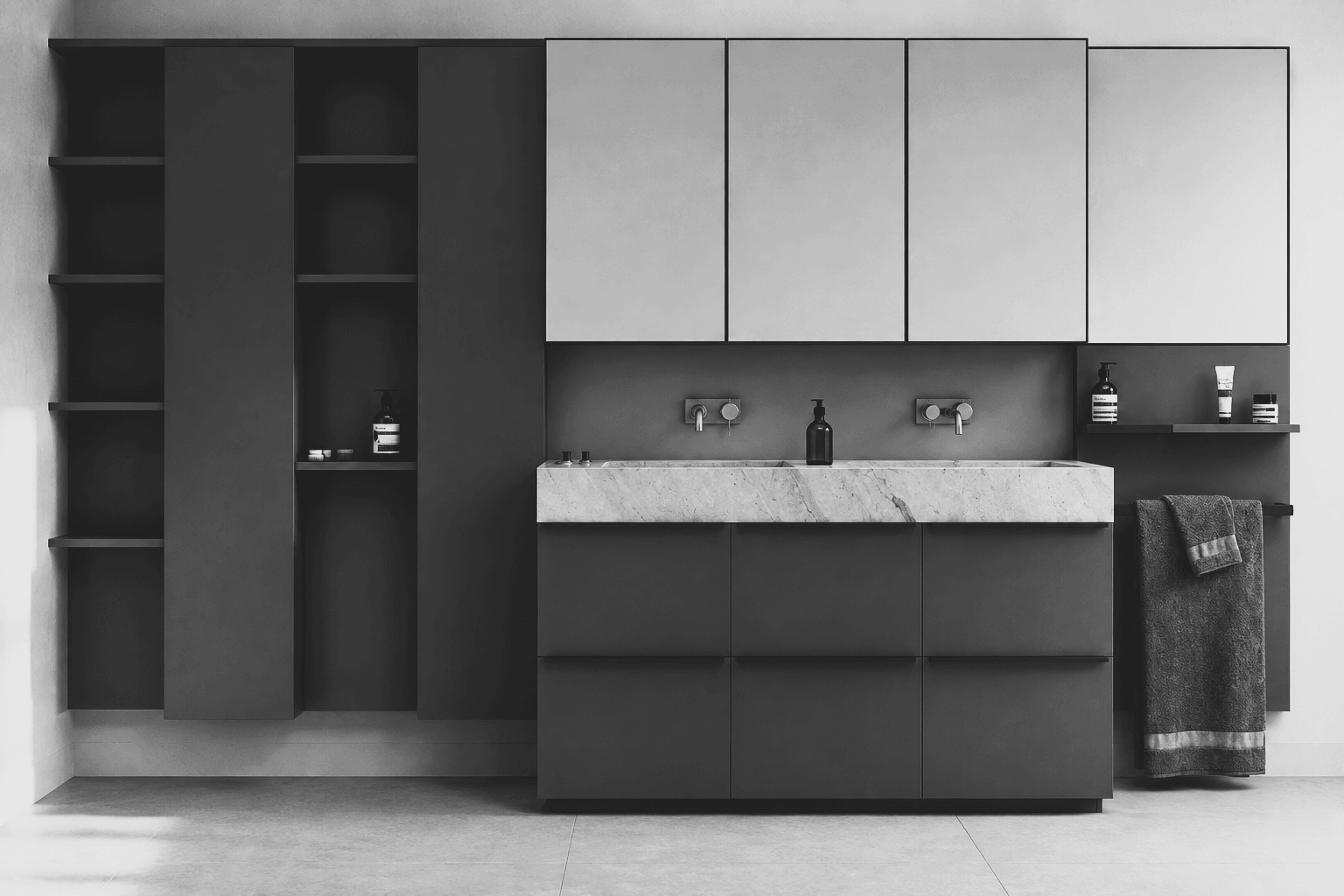
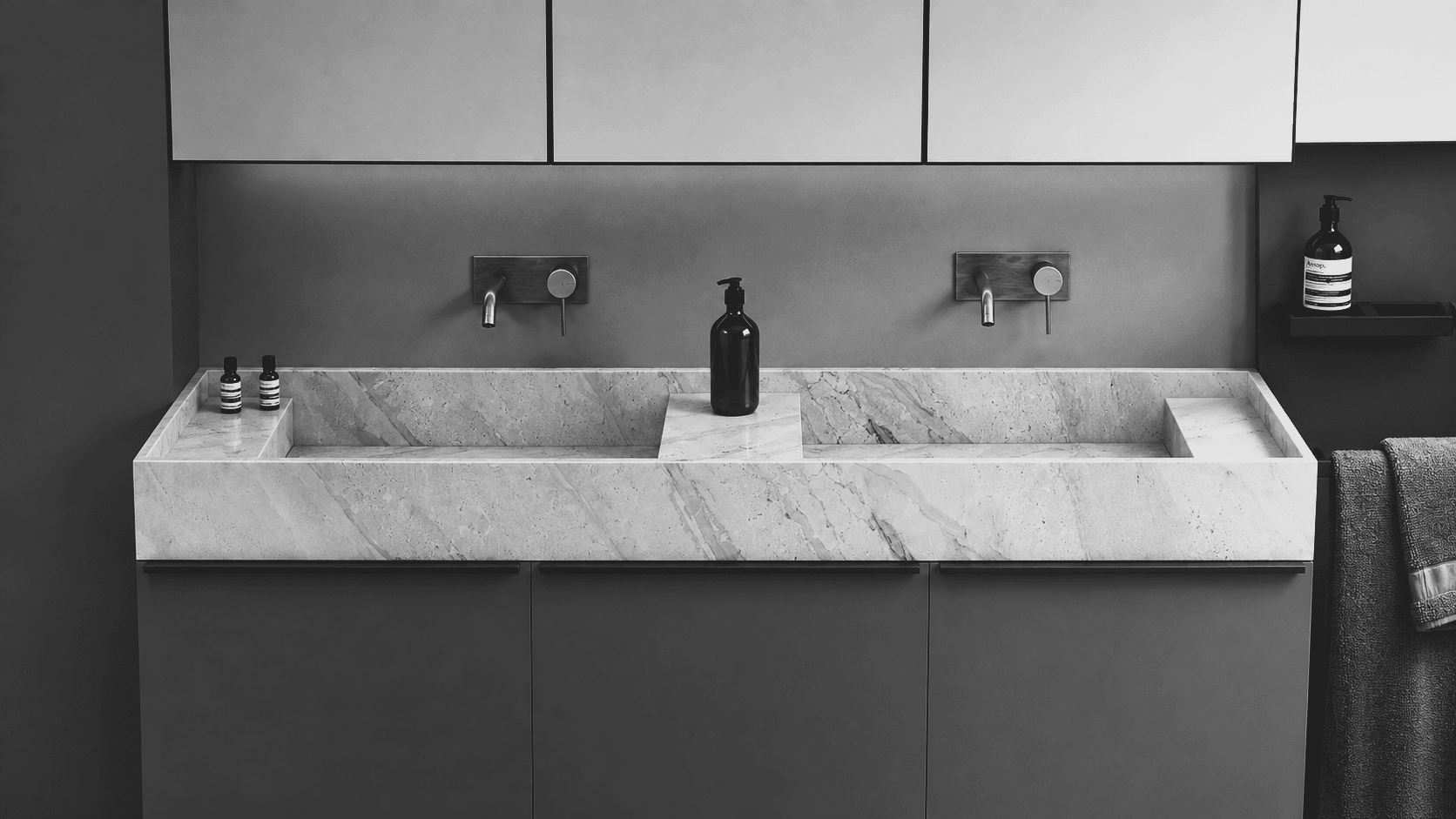
We plan lighting alongside joinery so that sources can be concealed — above a mirror, beneath a stone ledge, behind a return. The surface is lit, not the room, and the texture of that surface does the remaining work.
Shadow has weight
A space with no shadow has no depth. Allowing parts of a room to fall away is what gives the lit parts their value, and it is why a bathroom can hold its warmth after dark rather than turning clinical.
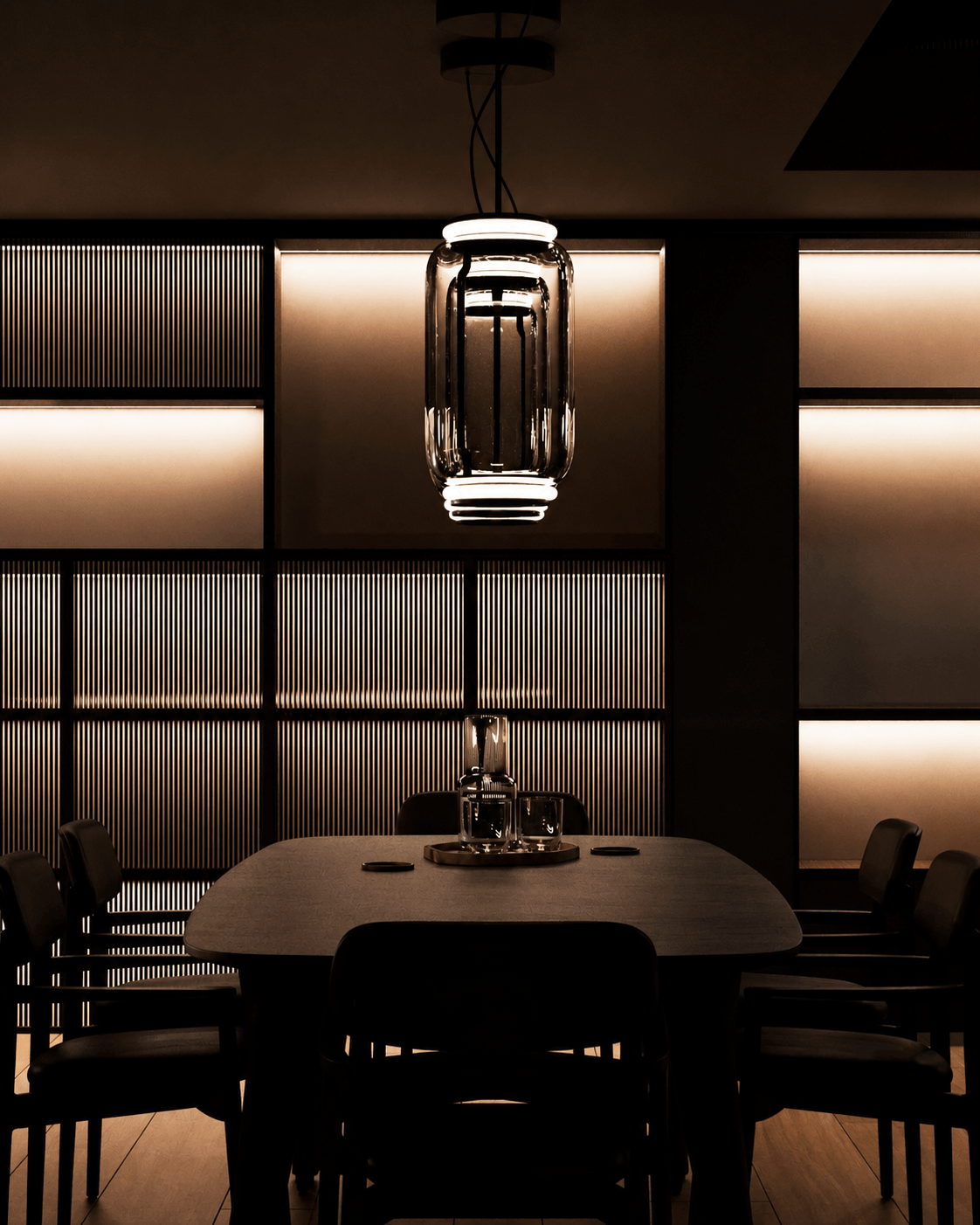
This requires the circuits and the control strategy to be settled early, at the same time as the cabinetry. Retrofitted concealed lighting is almost always visible as such.