Furniture beginswith architecture
On designing fitted pieces as part of a room's structure, rather than objects selected after the architecture is complete.
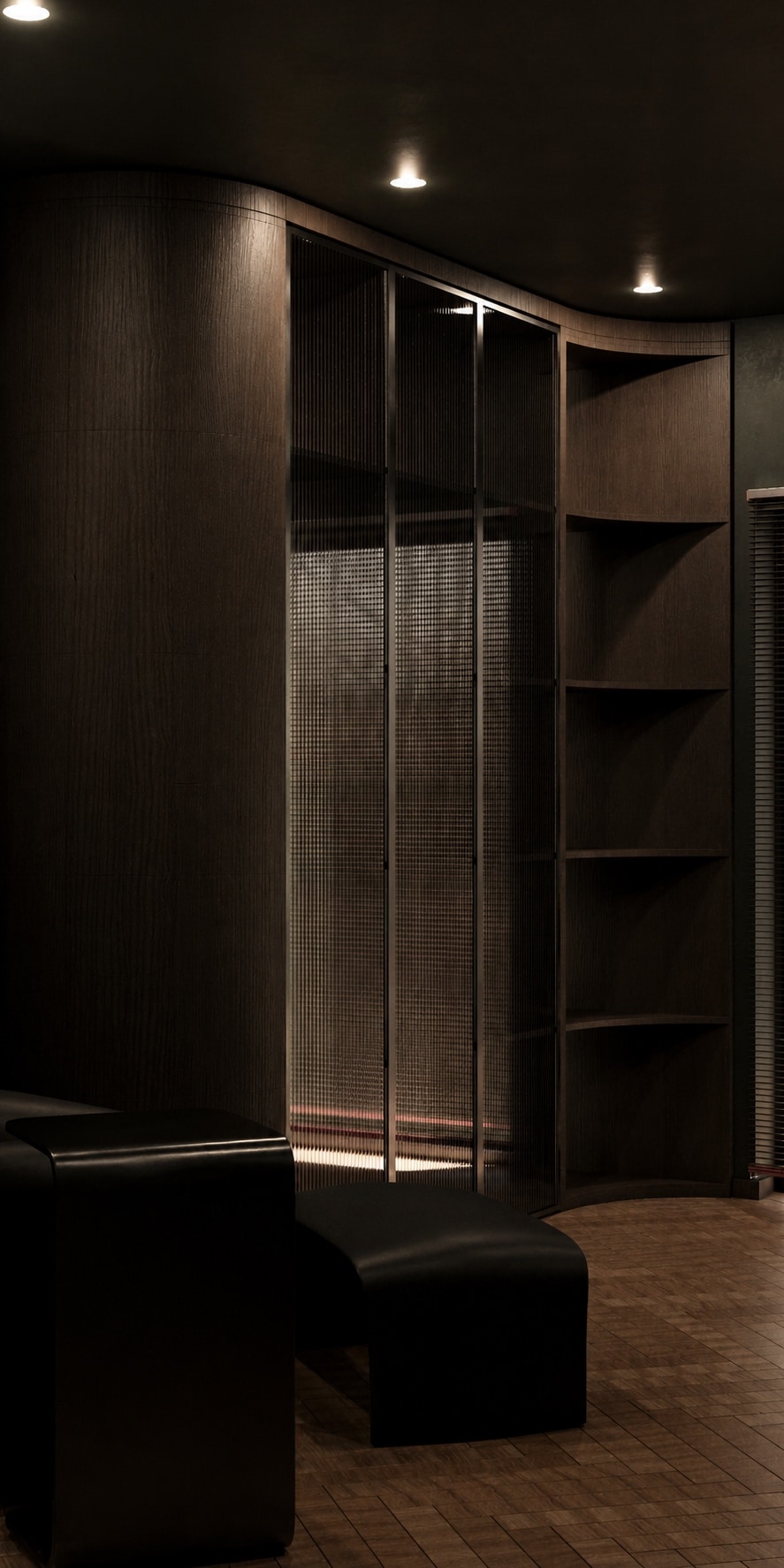
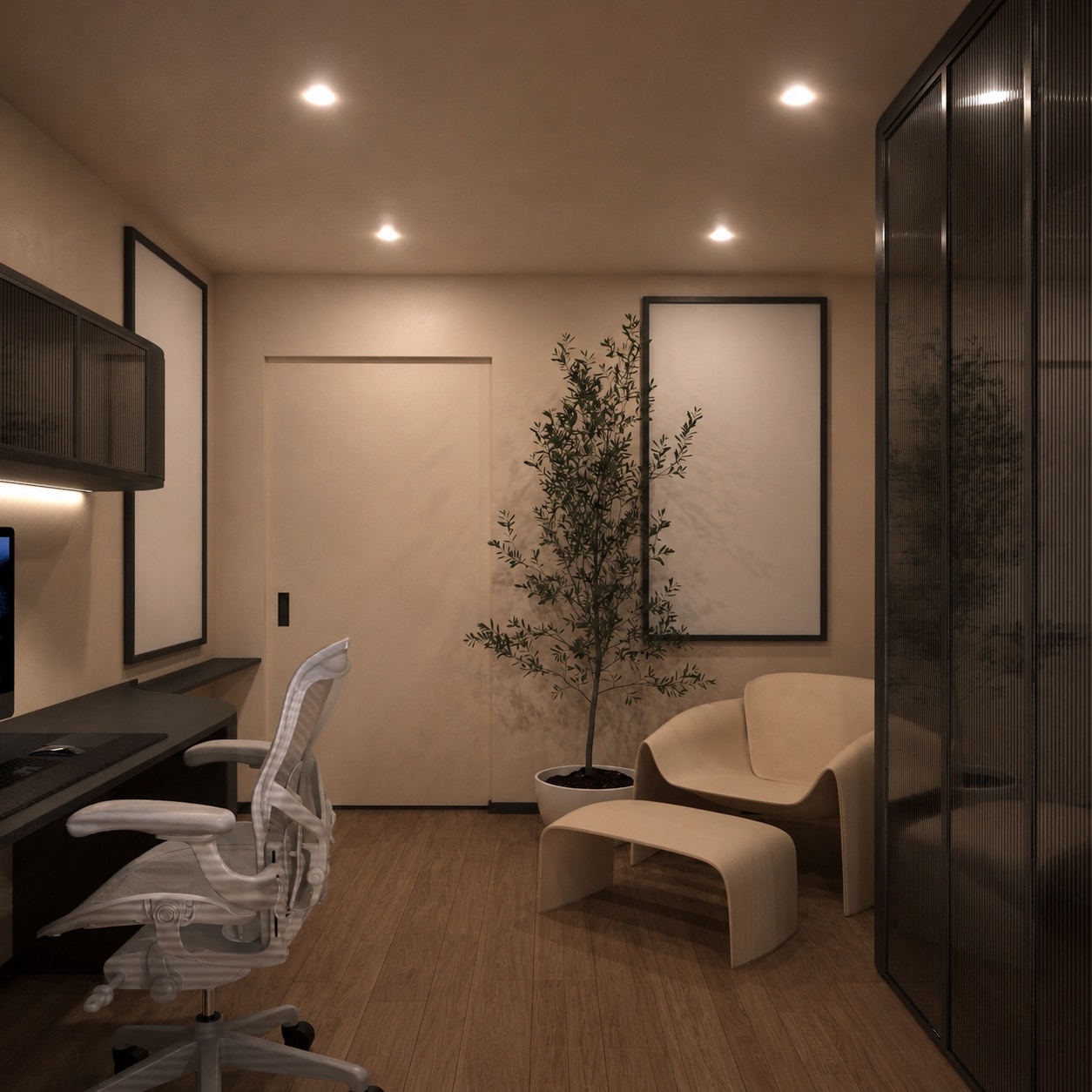
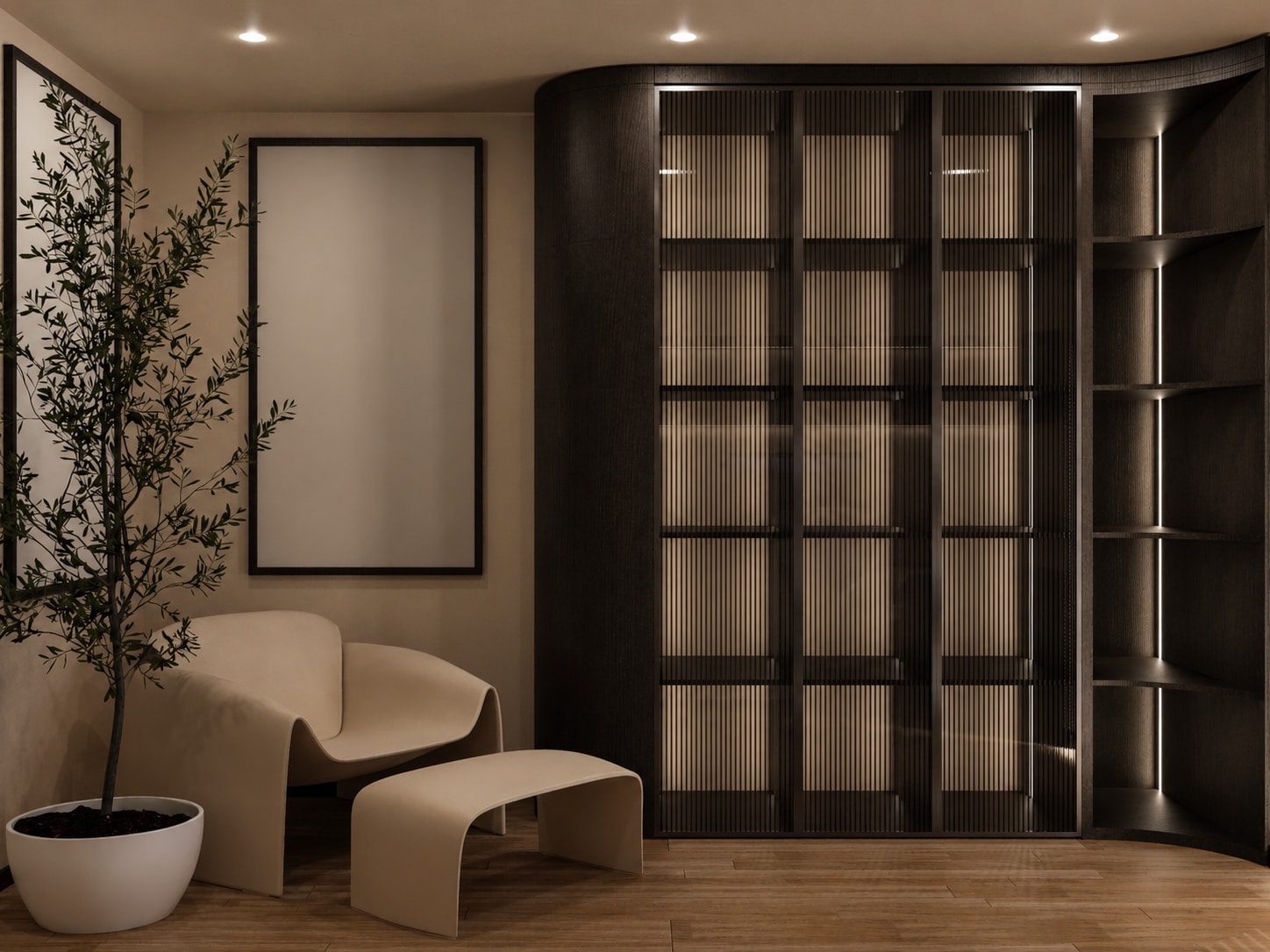
Bespoke furniture is most useful when it solves an architectural question. It can turn an awkward boundary into storage, carry light into a dark edge, or give a room a centre without adding another wall.
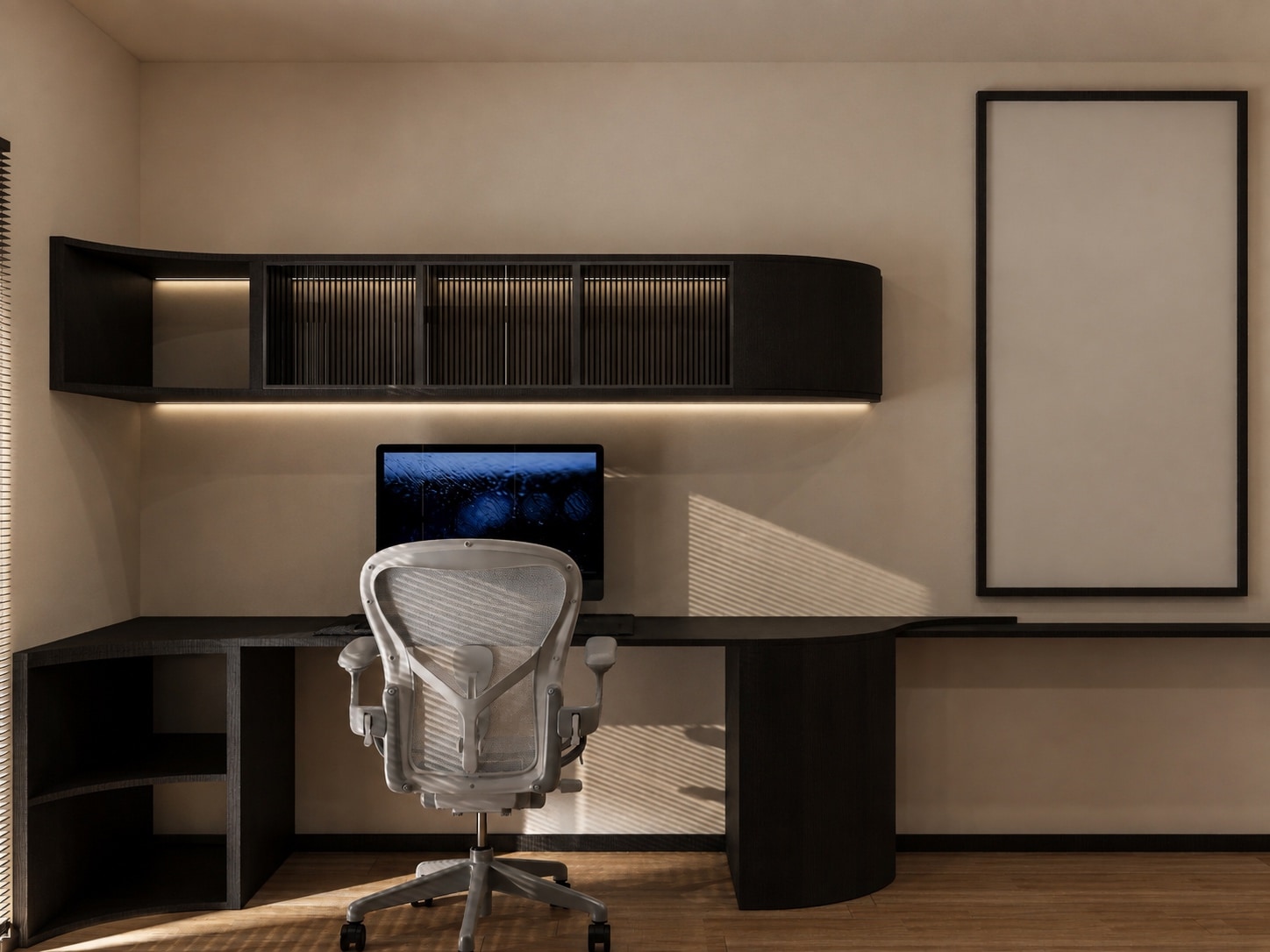
That requires it to begin at the same time as the plan. The dimensions of a desk affect circulation; the depth of a cabinet changes the room's proportion; the thickness of a shelf determines where a concealed light source can live.
One object, several responsibilities
The Ryder Street elevation stores, displays, illuminates and provides a working surface. Combining those roles makes the room calmer because each requirement is resolved inside the same measured language.
“The best fitted object changes the room before it asks to be noticed.”
The result is not less expressive. It simply moves expression away from added objects and into proportion, radius, grain direction and the way a surface meets the light.