Two modesof attention
A study can support concentration and retreat without dividing the room or making either condition feel temporary.
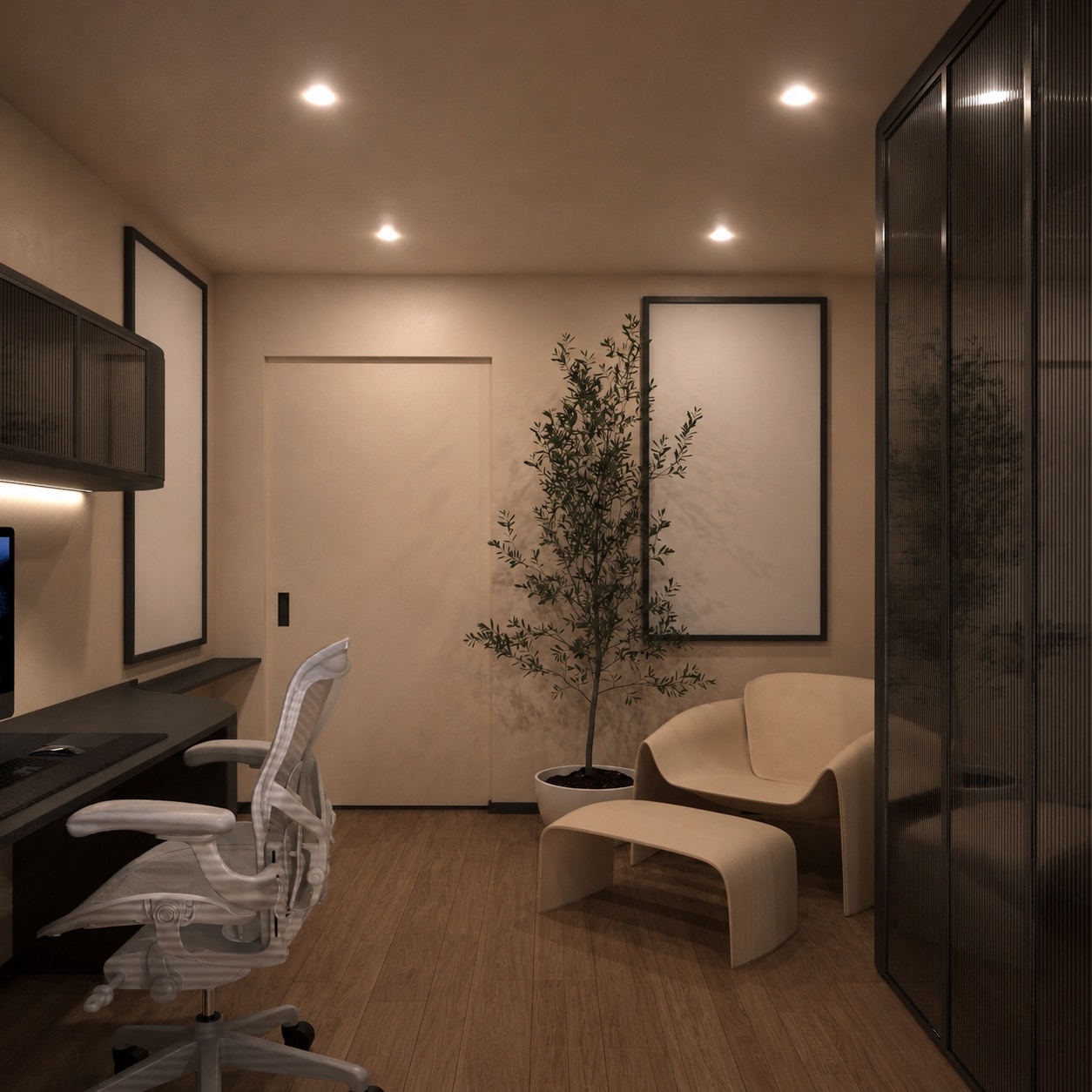
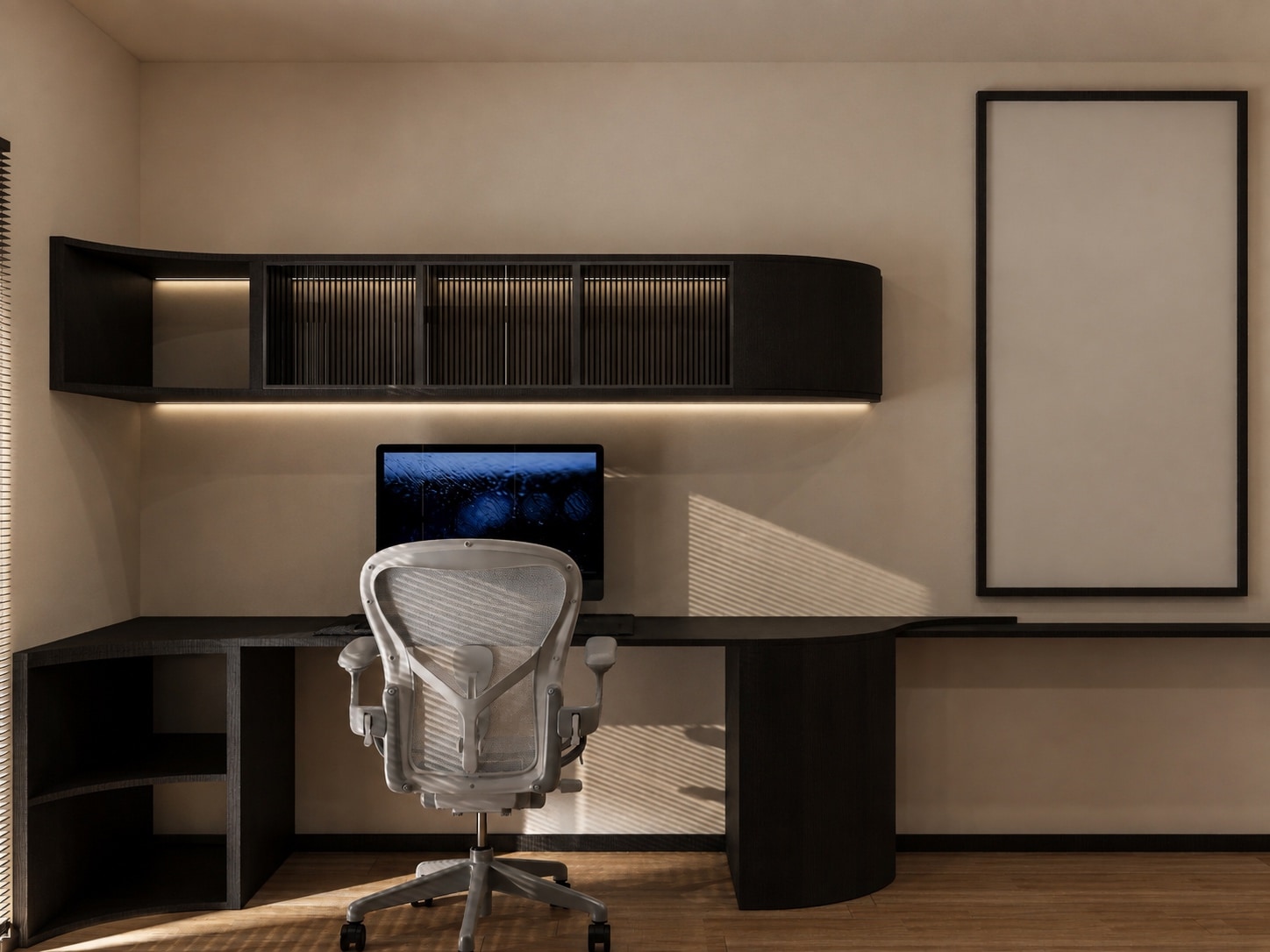
A private study often becomes a room with one instruction: work. The problem is not the desk itself, but the way everything else is made subordinate to it.
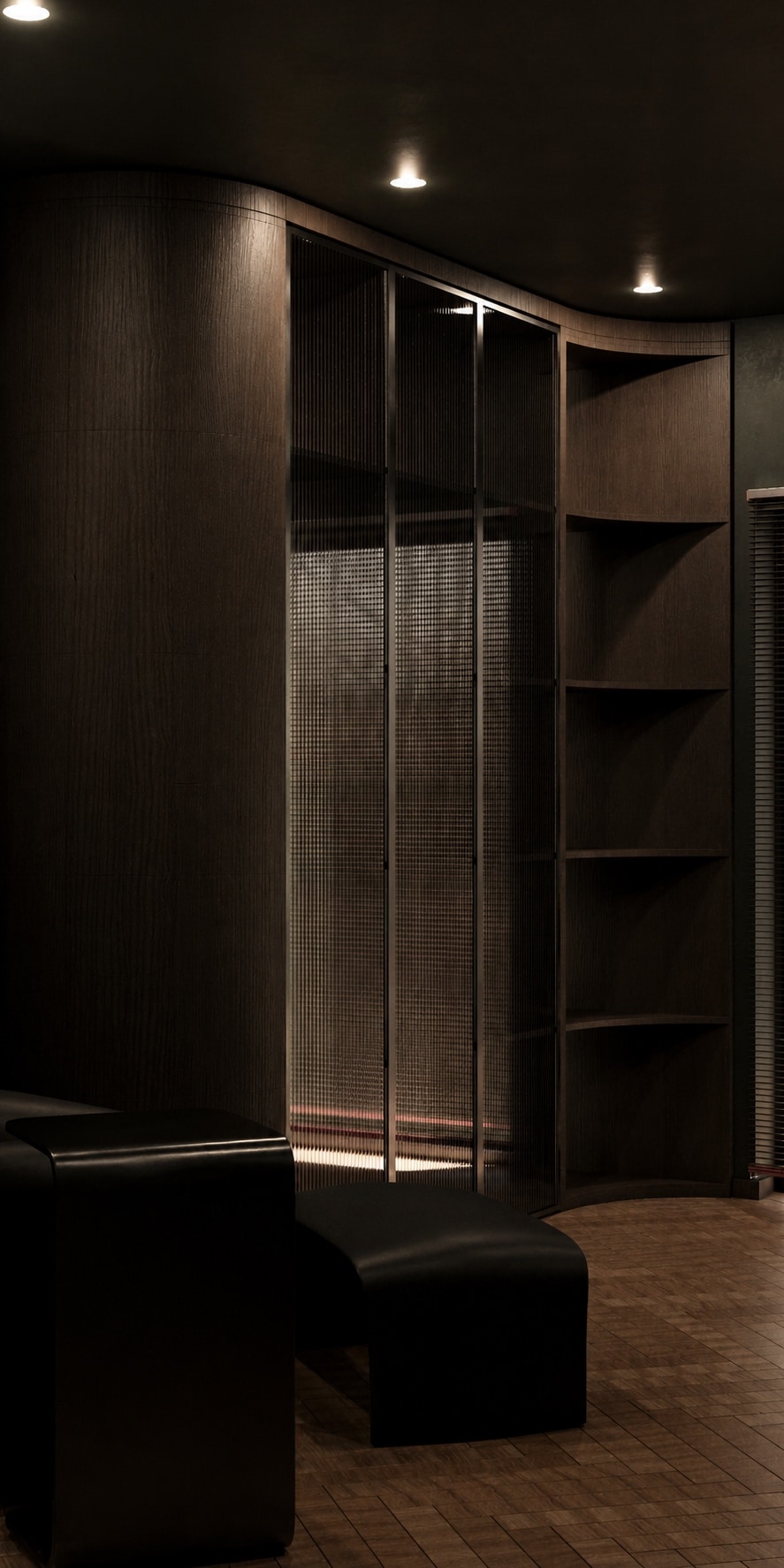
At Ryder Street, the room is organised around two kinds of attention. One is directed and active, held by the curved joinery and its working plane. The other is slower, gathered around a chair, an ottoman and the daylight at the window.
Difference without division
No screen separates the two conditions. Instead, geometry and tone do the work: dark timber concentrates the working edge while pale upholstery and open floor soften the reading corner.
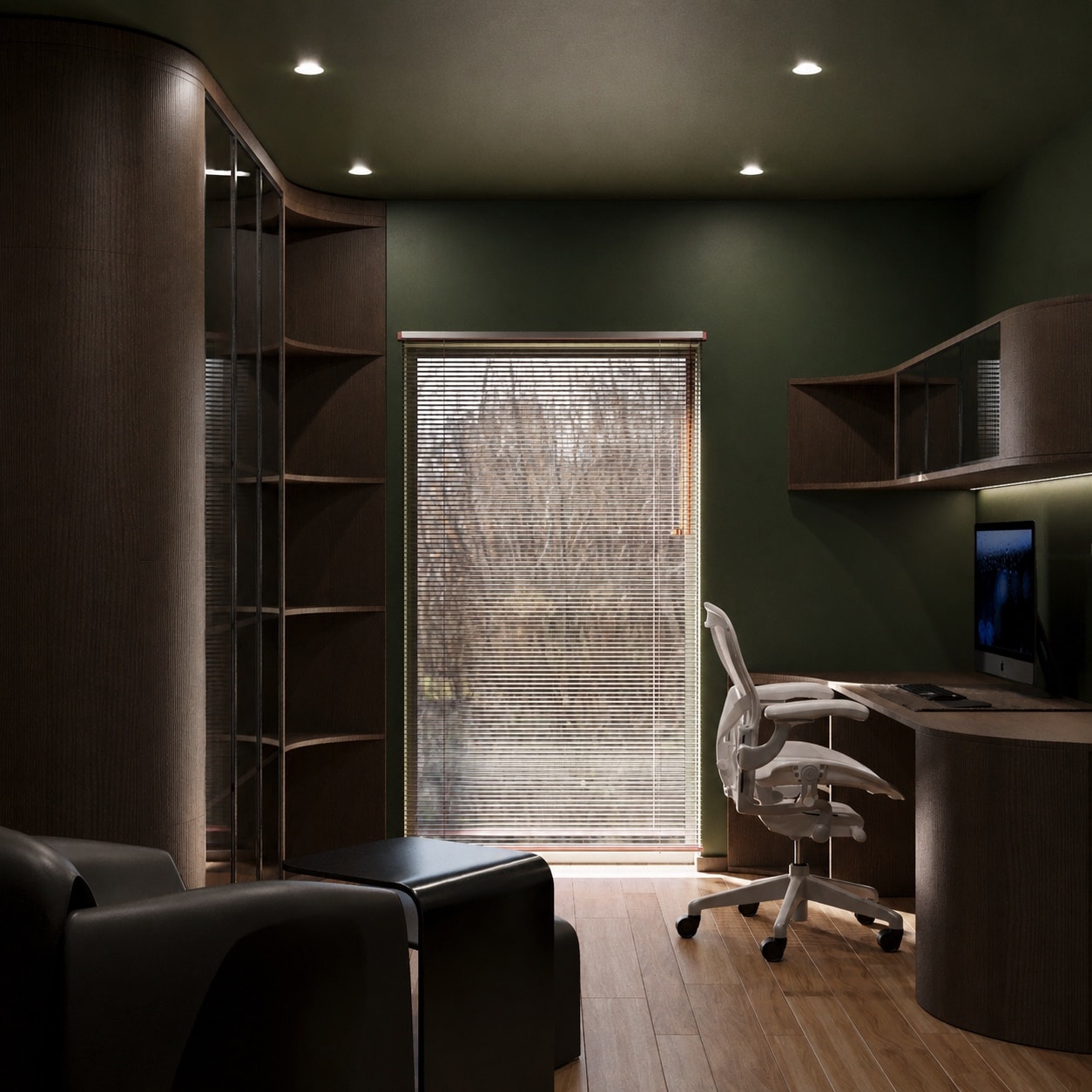
Because each mode has a clear centre, neither feels like an afterthought. The room can change use without being rearranged, and work can end without the desk needing to disappear completely.