The intelligence ofthe junction
Why the meeting point between two materials often carries more architectural weight than either surface alone.
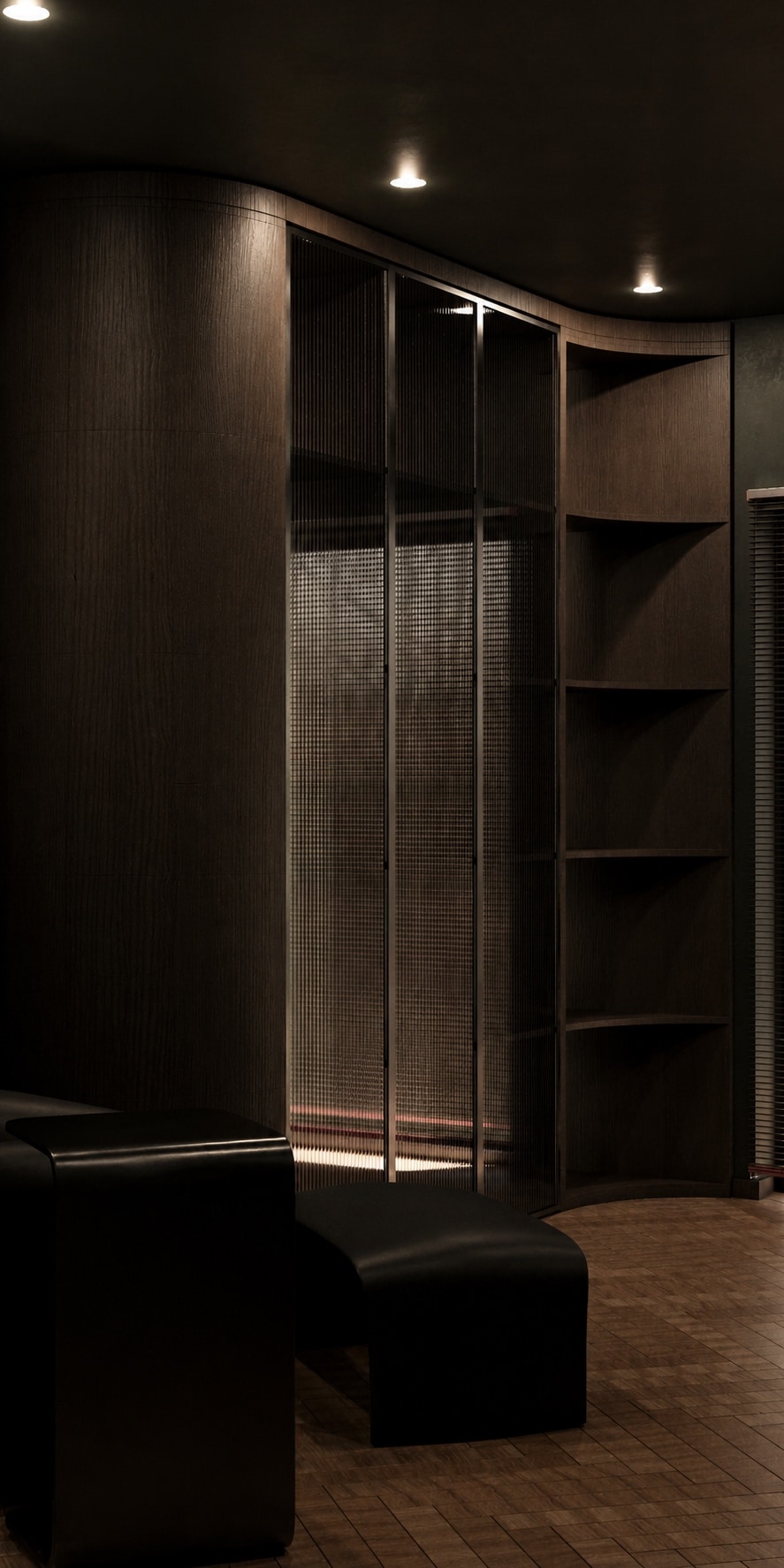
A material palette is only as convincing as the places where it changes. The face of a timber panel may be beautiful, but the reveal beside it tells us whether the room has been composed or merely covered.
We treat junctions as small sections through the whole project. They hold tolerances, movement, shadow, maintenance and the order in which things must be made. A quiet edge is rarely a simple edge.
The shadow line as a third material
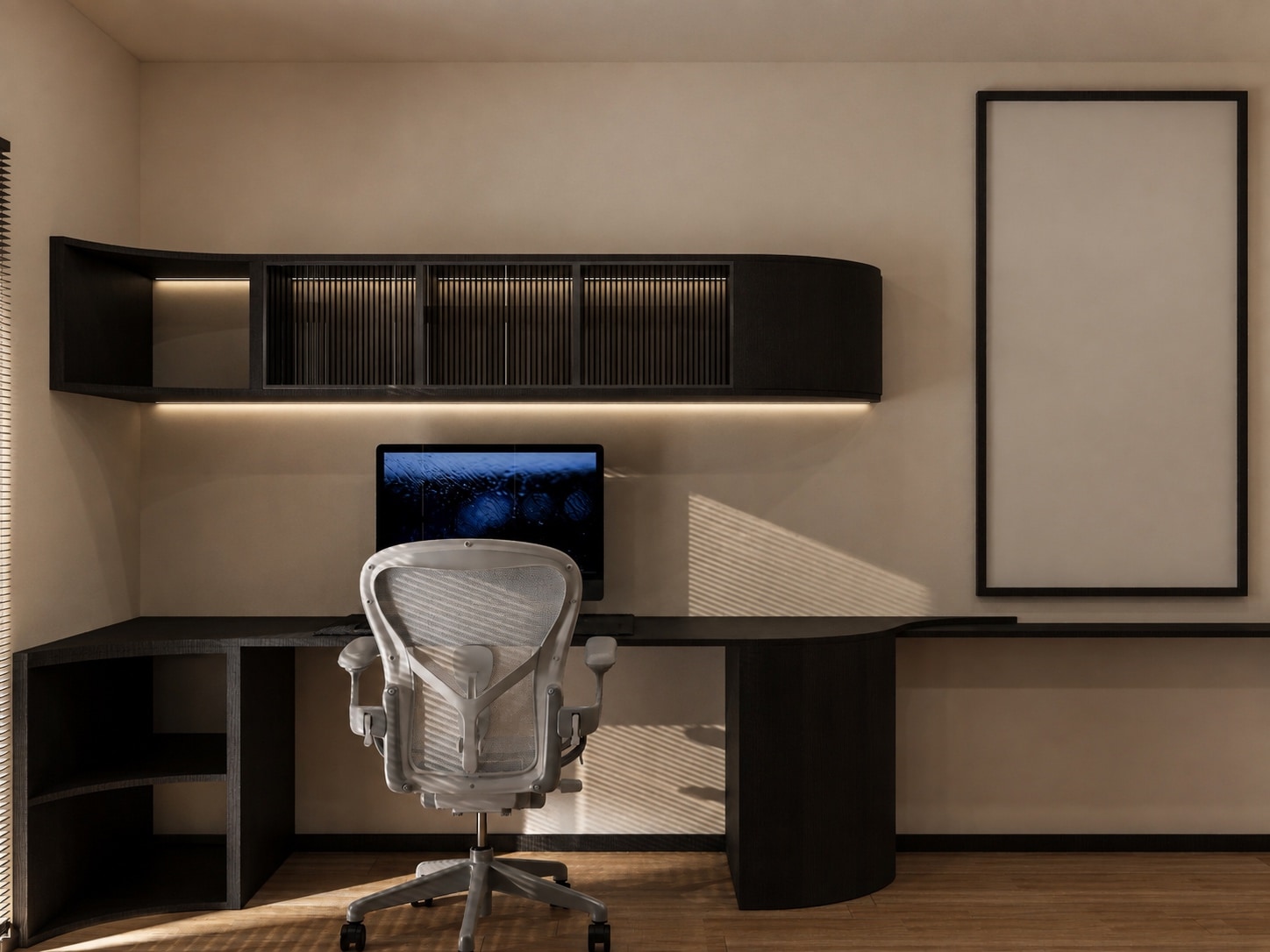
A narrow recess can do what another finish cannot: separate two planes without introducing a new colour. In the Ryder Street joinery, shadow releases the desk from the cabinet wall and lets both remain part of the same object.
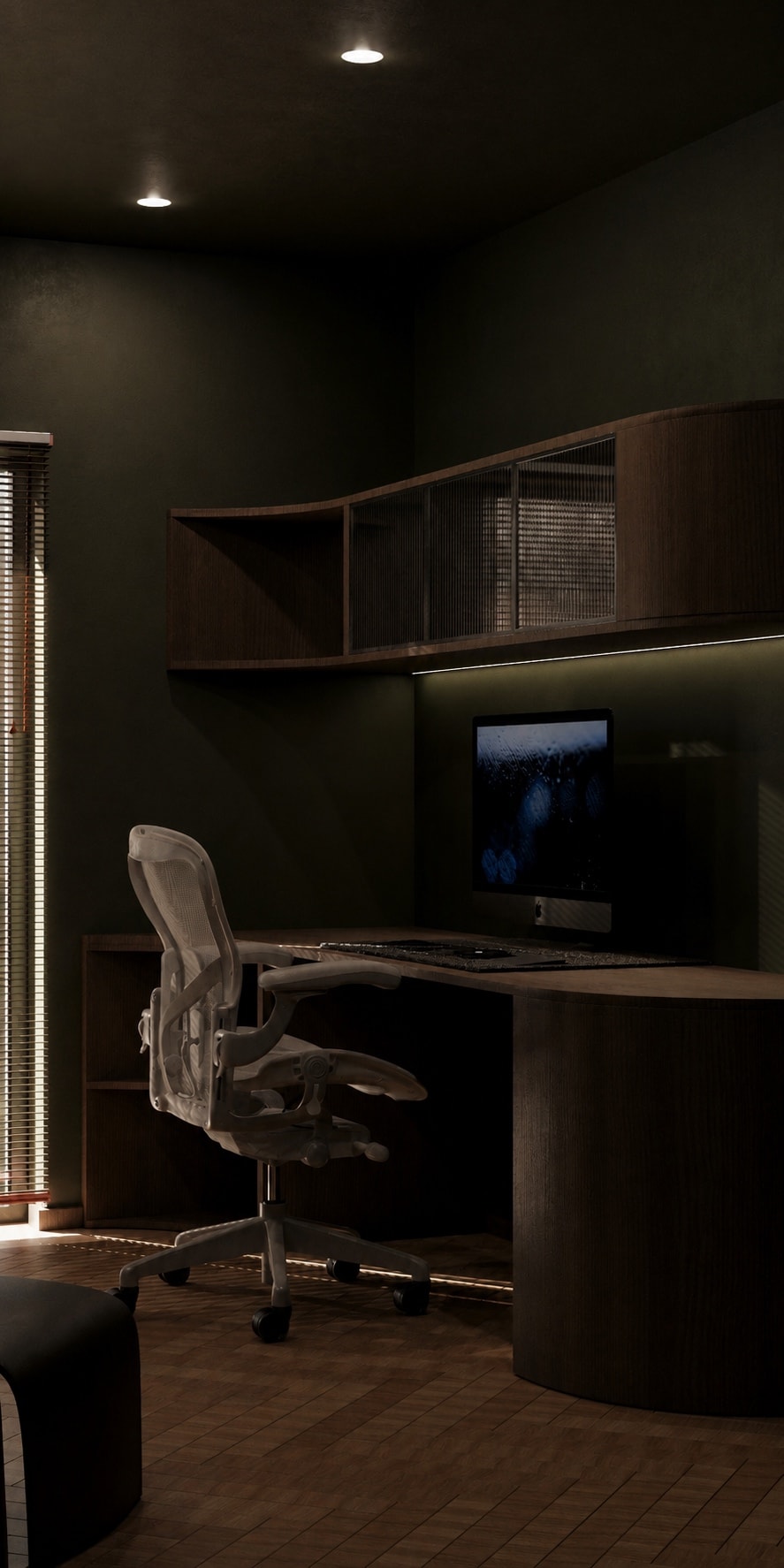
“The junction is where intention becomes construction.”
This is why details are drawn early. When the edge condition is known, the material can be specified for its real role rather than for a sample viewed in isolation.